
Creating places where women can own a home, build independence and shape their future.
Hera Communities
1. The vision behind the project
Hera City was born from a lifelong dream: to create a better world, a harmonious and sustainable community where people can live, work, study and develop in an environment that respects nature, human dignity and human rights, with particular attention to the role and empowerment of women.
The name Hera represents more than a city. It represents a vision of a new society, one in which women have the freedom, confidence and opportunities to participate fully in building the future.
The satellite communities would translate that vision into something tangible and accessible.
The ambition is simple but powerful: to give more women the possibility of having a home of their own, in a community designed around their well-being, independence, security and personal development.
A home is not simply a roof over someone’s head. It is an asset, a source of security, a foundation for independence and often the starting point for a new chapter in life.
This idea also has an important international dimension. The United Nations recognises women’s equal access to land, housing, property ownership and credit as essential to economic independence and gender equality.
2. The mission of Hera Communities
To develop a network of affordable, sustainable and inclusive residential communities, offering women the opportunity to acquire their own homes and become part of a supportive environment that promotes independence, solidarity, education, health and personal growth.
These communities would be designed to:
· Make home ownership more accessible to women.
· Encourage women to build financial security and long-term assets.
· Offer a safe, healthy and environmentally responsible living environment.
· Create opportunities for entrepreneurship, professional development and education.
· Promote solidarity between women of different generations and backgrounds.
· Develop a sense of belonging and collective responsibility.
· Create a replicable model that can be implemented in different countries.
The intention is not to create isolated residential developments, but rather communities with a purpose, an identity and a social mission.
3. The concept: a home, a community, an opportunity
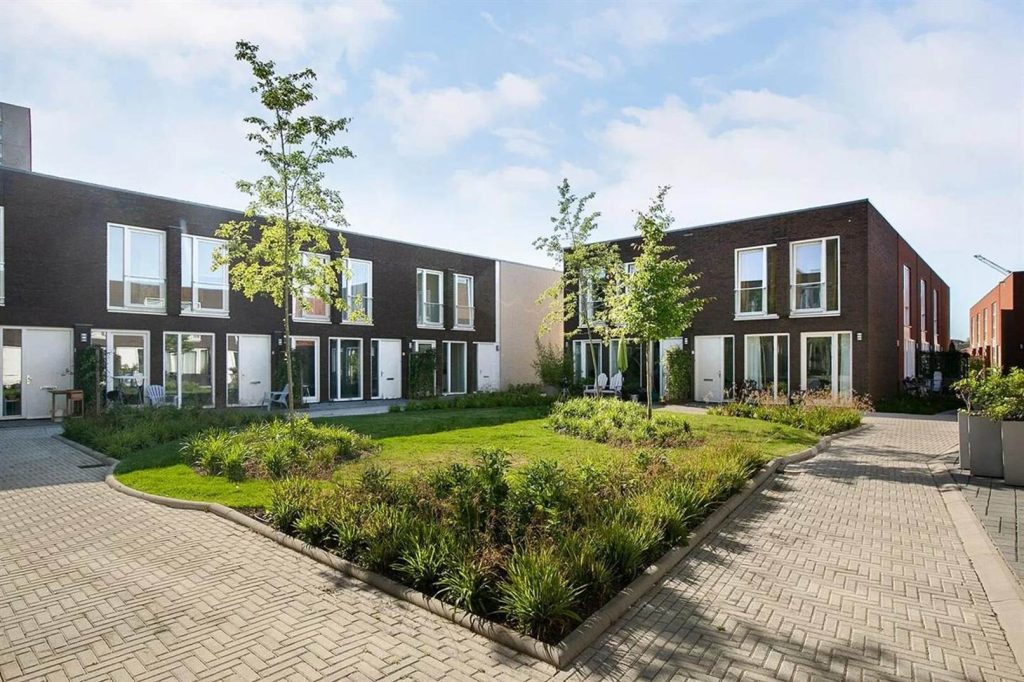
I propose developing a model of small residential neighbourhoods, strategically located close to towns and cities, where women can purchase homes at accessible prices.
Each community would have its own architectural identity, while following the same Hera principles.
The project would combine three dimensions:
A. Affordable home ownership
A selection of carefully designed houses or apartments, with different sizes and price levels, allowing women to purchase according to their financial possibilities.
B. A supportive community
Shared spaces that encourage social interaction, mutual support, learning, activities and intergenerational relationships.
C. A platform for empowerment
Access to initiatives that support women’s professional, financial, social and personal development.
The fundamental distinction is that a woman would not simply be buying a property. She would be joining a community that shares a common philosophy.
4. Who are the communities for?

The project should welcome women at different stages of their lives.
Young women starting their independent lives
Women beginning their professional careers who want to acquire their first home and establish financial independence.
Single mothers and women with families
Women who need security, accessible housing, practical support and a healthy environment in which to raise their children.
Entrepreneurs and professional women
Women seeking a home that can also support remote working, entrepreneurship and professional development.
Women in a new stage of life
Women who wish to start again, downsize, become independent or enjoy a healthier and more socially connected lifestyle.
The project should be inclusive of different ages, professions, family circumstances and financial backgrounds. Its unifying element is the opportunity to give women greater control over their lives.

5. How should a Hera Community look?
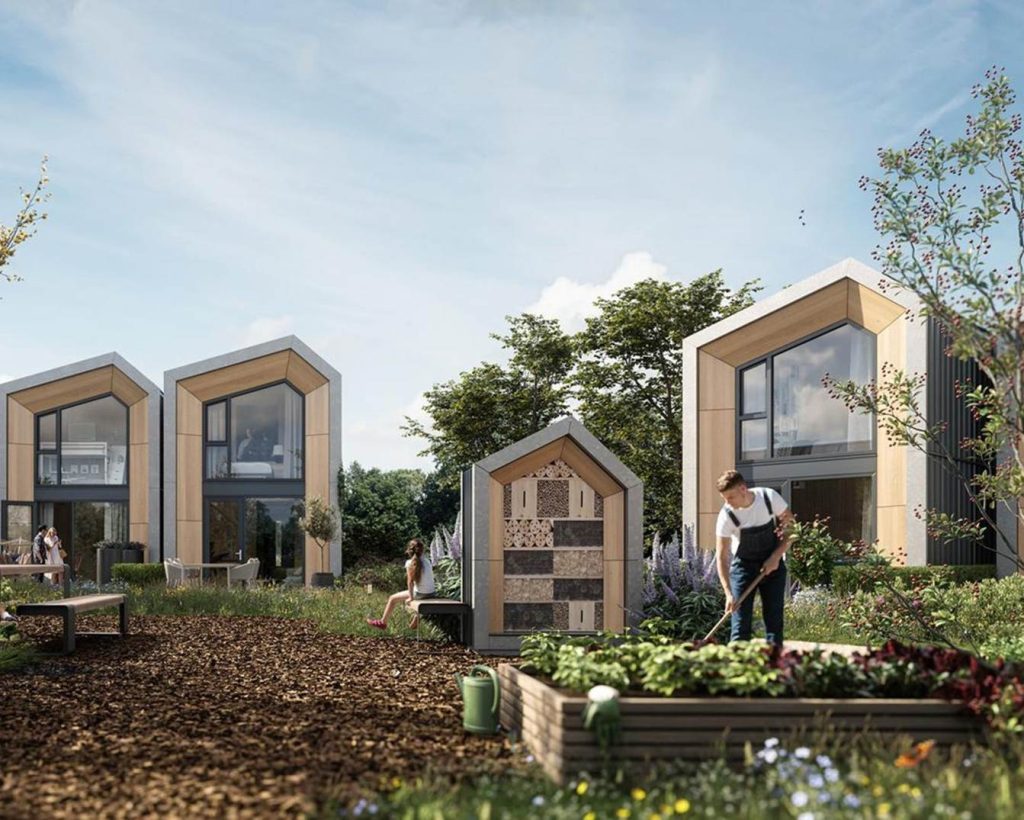
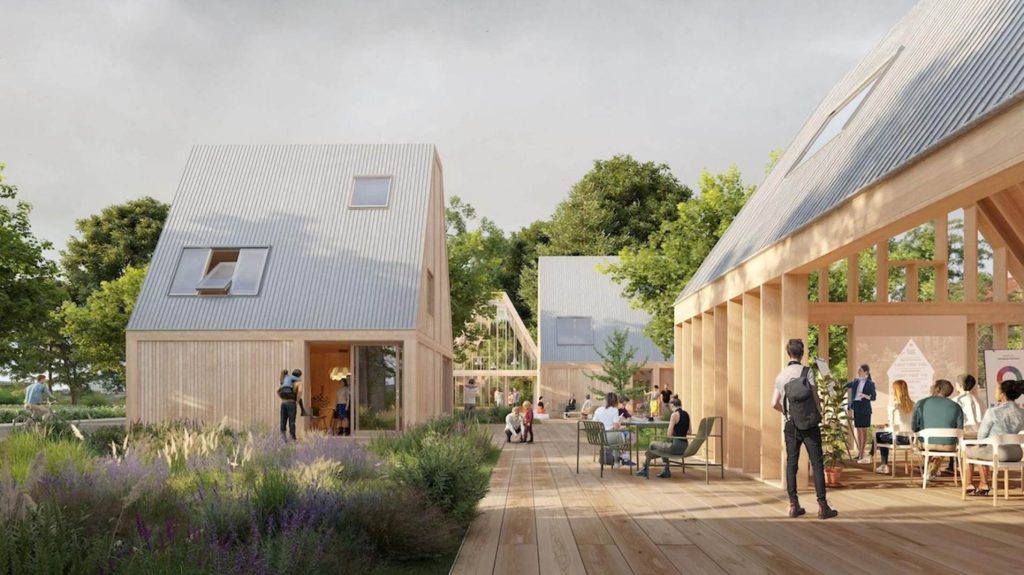
I envision a human-scale residential development, not a conventional housing estate.
The architectural concept should combine modern design, functionality, sustainability and a welcoming atmosphere.
The proposed community could include:
Component | Purpose |
Private homes | Affordable ownership and personal independence |
Green areas and gardens | Nature, relaxation and well-being |
Community house | Meetings, events and social activities |
Co-working space | Professional work and entrepreneurship |
Learning room | Training, workshops and education |
Fitness and wellness area | Physical and mental well-being |
Children’s space | Safe activities and family support |
Shared kitchen or café | Social interaction and community life |
Not every community needs all these facilities. The model should be adapted to the size, location and purchasing power of its future residents.
An essential principle would be to ensure that the development remains affordable not only at the moment of purchase but also in terms of maintenance, energy consumption and everyday living costs.
6. The five pillars of Hera Communities
I would build the philosophy around five pillars.
1. Independence
Home ownership in a woman’s own name, where legally and financially possible, is a powerful instrument of autonomy and security.
2. Solidarity
A community where women can support one another, share experiences, create networks and overcome difficulties together.
3. Sustainability
Energy-efficient buildings, renewable energy where feasible, responsible water management, green spaces, waste reduction and sustainable mobility.
4. Health and well-being
Access to physical activity, nature, healthy lifestyles, mental well-being and social connections.
5. Education and opportunity
Training, financial literacy, digital skills, entrepreneurship and opportunities for women to develop their professional potential.
These principles should be translated into measurable commitments rather than remain simply part of the project’s communication.
7. The empowerment programme: beyond the house
This is where I believe Hera can distinguish itself from traditional property developers.
Every community should have a programme of activities and opportunities that gives real meaning to the concept of empowerment.
I would propose the creation of the Hera Women’s Development Programme, with initiatives such as:
· Financial literacy: understanding mortgages, savings, investments and property ownership.
· Entrepreneurship: helping women develop business ideas and access professional networks.
· Education: workshops, courses and access to learning opportunities.
· Mentorship: connecting younger women with experienced professionals and entrepreneurs.
· Health: promoting prevention, sport, nutrition and mental well-being.
· Leadership: encouraging women to participate in community decisions and take leadership roles.
· Solidarity: creating support networks for women facing difficult circumstances.
A community could also establish partnerships with universities, companies, banks, foundations and organisations dedicated to women’s development.
The objective is to create a virtuous circle: women who become more independent can, in turn, help other women achieve the same.
8. A sustainable and financially viable model
Hera Communities should be both a social-impact project and a financially sustainable real-estate development model.
I would propose the following structure:
The property model
· Identify suitable land in locations with access to employment, schools, healthcare and public transport.
· Develop a standardised architectural concept that can be adapted to local conditions.
· Build affordable houses or apartments with controlled construction and operating costs.
· Sell the properties directly to women, with transparent pricing.
· Explore partnerships with banks and financial institutions to facilitate mortgage access.
· Establish optional support mechanisms for buyers who have difficulty meeting initial financing requirements.
The social-impact model
A percentage of the project’s profits, or a contribution agreed with development partners, could support the Hera Women’s Development Programme.
This would allow each development to contribute to the mission beyond the construction and sale of properties.
Possible financial and institutional partners:
· Real-estate developers and construction companies.
· Banks and mortgage providers.
· Institutional and private investors.
· Local authorities.
· Universities and educational institutions.
· Companies interested in ESG and social-impact investment.
· Foundations and organisations supporting women’s rights.
An important consideration is that affordability must be demonstrated through actual land, construction, financing and maintenance costs. The project should not promise prices or financing conditions before feasibility studies have been completed.
9. A community governed with women, not simply built for women
One of the most interesting aspects of this project would be to give residents an active role in shaping their community.
I would suggest establishing a Hera Community Council, with elected representatives from among the residents.
Its responsibilities could include:
· Participating in decisions concerning shared spaces.
· Organising community activities.
· Proposing educational and social initiatives.
· Promoting solidarity and mutual assistance.
· Representing residents in discussions with Hera management.
· Encouraging responsible management of common resources.
This would reinforce the idea that women are not simply beneficiaries of the project. They are its protagonists.
The legal structure should also protect the ownership rights of residents, ensure transparent management and prevent the social mission from being used to restrict women’s freedom to sell, inherit or transfer their properties.
10. A model that can grow internationally
The satellite communities could become a network of Hera-branded developments in different countries.
Rather than building one enormous project, Hera could develop smaller communities, each adapted to its local environment and economic reality.
Potential development phases:
Phase | Objective |
Pilot | Develop the first Hera Community and test the model |
Consolidation | Evaluate financial, social and environmental results |
Expansion | Establish further communities in Portugal |
Internationalisation | Develop partnerships and replicate the model in other countries |
The first project should serve as a demonstration of what Hera can achieve: a financially viable development with measurable social impact.
11. The ESG dimension
Hera Communities would also provide a strong practical example of ESG in real estate.
ESG dimension | Application |
Environmental | Energy efficiency, renewable energy, green spaces, water management and low-impact construction |
Social | Women’s property ownership, affordable housing, safety, inclusion, health and education |
Governance | Transparent management, resident participation, accountability and measurable social impact |
The project aligns with the principles of the UN Sustainable Development Goals, particularly:
· SDG 5 – Gender Equality.
· SDG 7 – Affordable and Clean Energy.
· SDG 10 – Reduced Inequalities.
· SDG 11 – Sustainable Cities and Communities.
· SDG 17 – Partnerships for the Goals.
The New Urban Agenda also recognises affordable housing, women’s security of tenure and gender-responsive urban planning as important foundations of sustainable communities.
12. Measuring the impact
To demonstrate that Hera is making a difference, each community should have an impact assessment.
Some proposed indicators:
· Number of women who become property owners.
· Number of first-time female homeowners.
· Percentage of properties purchased by women in their own name.
· Housing costs compared with local market alternatives.
· Number of women participating in educational programmes.
· Number of businesses or professional initiatives created.
· Resident satisfaction and sense of security.
· Energy and water consumption per household.
· Participation in community governance.
This information would be valuable for investors, institutional partners, public authorities and ESG stakeholders.
13. The identity and positioning
I would retain the Hera name, because the connection with Hera City is essential.
Some possible names:
HERA COMMUNITIES
A network of communities empowering women
A home of your own. A community of your own. A future of your own.
HERA LIVING
Empowering women through sustainable living
HERA HOMES
Affordable homes. Independent women. Stronger communities.
My preference is HERA COMMUNITIES, because it communicates a larger ambition than housing alone. It can become a recognised international concept.
14. The first project: turning the vision into reality
I would recommend starting with one pilot community
The first development could be relatively small, perhaps 30–50 homes, depending on the land, local demand and feasibility.
The initial work should include:
1. Feasibility study: identify the target market, land availability, construction costs and realistic selling prices.
2. Social needs assessment: understand the housing difficulties and financing barriers experienced by women in the selected location.
3. Architectural concept: develop the first Hera Community design.
4. Financial structure: establish investment requirements, sales strategy, financing partnerships and affordability criteria.
5. Institutional partnerships: approach local authorities, banks, developers and organisations supporting women.
6. Pilot development: build and sell the first homes and launch the empowerment programme.
7. Impact assessment: measure the results and prepare the model for replication.
An important decision will be how to balance commercial sales with social affordability. I would explore a combination of market-priced homes and a protected allocation of homes with additional affordability support, funded through partnerships or cross-subsidy, where feasible.
15. The bigger ambition: Hera as a movement
There is something particularly important about this project.
Hera City represents a vision of a better society. Hera Communities would make that vision accessible to more people, in more places.
Not every woman will have the opportunity to live in Hera City. But many more could have the opportunity to become part of its philosophy.
The satellite communities would therefore become extensions of Hera’s mission, bringing its values into different territories and creating a network of women who share a common belief: that a better future begins with giving people the conditions to build their own lives.
I would like to see these communities become examples of a new approach to residential development, where economic viability and social responsibility work together.
We are not simply building houses. We are creating opportunities, independence and belonging.